


MY VISION
Increasing Real Wages
- What Concrete Measures Will Be Necessary?

In recent years, wage increases in Japan have failed to keep pace with rising prices.
In this issue of My Vision, we discuss the policies and initiatives that will be necessary in order to achieve sustained wage growth that outpaces inflation.
EXPERT OPINIONS
- Increasing Real Wages
- What Concrete Measures Will Be Necessary? How should we view the current government’s response to the stagnation of real wages?
What measures will be necessary in order to increase Japan's real wages?
-
01
Invest in Cutting-edge Technology and Human Capital to Boost Medium-to-long-term Productivity
 Keiko Ito Professor, Graduate School of Social Sciences, Chiba UniversityJapan's declining international presence has become impossible to ignore. Current policy discussions...
 -
02
Boost Work Incentives and Enhance Productivity to Create a Cycle of Wage Increases
 Izumi Yokoyama Professor, Graduate School of Economics, Hitotsubashi UniversityUnless the government gains the understanding and trust of the people, it will not achieve the...
 -
03
Create an Environment Encouraging Companies to Take Risks and Make Investments with High Growth Potential
 Mikiharu Noma Professor, Department of Business Administration, Graduate School of Business Administration, Hitotsubashi UniversityGovernment subsidy policies have slowed the turnover of companies in Japan. Raising the minimum wage...
 -
04
Are Managers Effectively Managing R&D Personnel?
 Tohru Yoshioka-kobayashi Associate Professor, Department of Business Administration, Graduate School of Business Administration, Hitotsubashi UniversityJapan is experiencing a clear polarization between “innovating companies” and “non-innovating ...
 -
05
Drive Innovation through Cross-Industry Collaboration to Accelerate Social Implementation
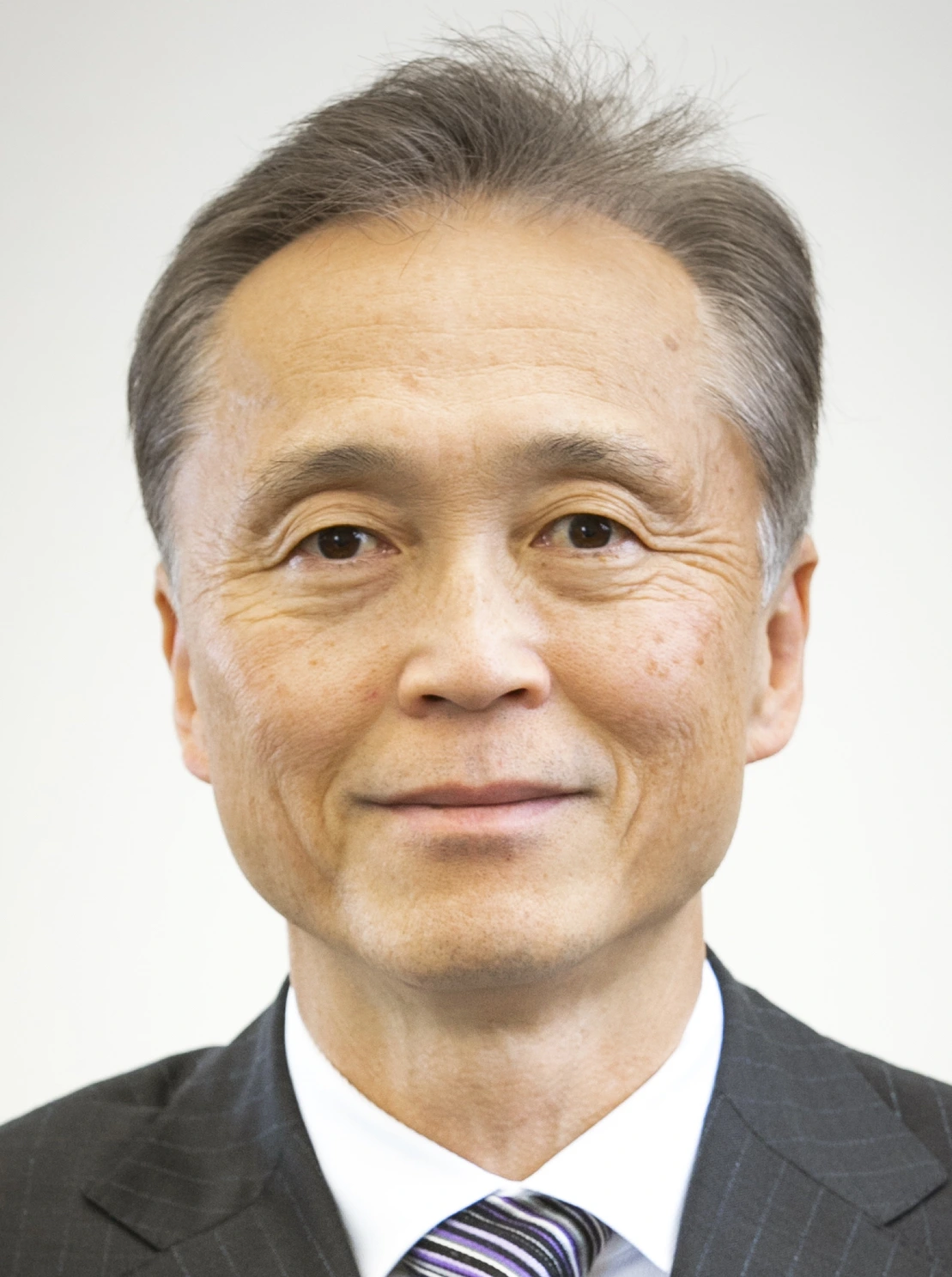 Kenji Yasukawa Chair, Committee on Innovation, Japan Business Federation (Keidanren) / Representative Director, Chairman of the Board, Astellas Pharma Inc.At the corporate level, combining small ideas and repurposing existing technologies for new areas makes...
ABOUT THIS ISSUE
-
Looking Beyond Individual Companies to Realize Structural Reforms in Society as a Whole
- We Must Review Regulations and Change the Managerial Mindset
Looking Beyond Individual Companies to Realize Structural Reforms in Society as a Whole
- We Must Review Regulations and Change the Managerial MindsetNoriyuki Yanagawa Executive Vice President, NIRA / Professor, Graduate School of Economics, The University of TokyoWage growth in Japan has failed to keep pace with recent inflation. While major advanced economies have increased real wages per capita over the past 30 years, wages in Japan have remained stagnant. Multiple structural factors have been identified as contributing to this sluggish growth in real wages. Now is the time to further policy discussions towards overcoming these challenges. For this issue of My Vision, we asked researchers from a variety of fields and a business leader their opinions regarding the necessary steps to realizing sustained growth in Japan's real wages and the path to enhancing the competitiveness of Japanese companies.
01
Invest in Cutting-edge Technology and Human Capital to Boost Medium-to-long-term Productivity
Invest in Cutting-edge Technology and Human Capital to Boost Medium-to-long-term Productivity
Keiko Ito Professor, Graduate School of Social Sciences, Chiba University
Japan's declining international presence has become impossible to ignore. Current policy discussions focus only on short-term measures like tax cuts and benefits, but my concern is not tomorrow's Japan—it is Japan's growth in 10 or 20 years. From this perspective, the biggest challenge is whether we can invest in cutting-edge technology and human capital to boost medium-to-long-term labor productivity. Without an increase in labor productivity, there will be no increase in real wages.
While I endorse the government’s Basic Policy on Economic and Fiscal Management Reform 2025, it lacks concrete measures to stimulate investment by large corporations. Large corporations employ only about 30% of the workforce, but they generate a substantial share of the nation's GDP. Unless large corporations actively invest and grow, the economic pie will not expand, making it difficult to secure wage growth for small and medium-sized enterprises (SMEs) and non-market service industries. How large corporations mobilize their cash reserves for investment will significantly influence future wage increases.
While physical investment is also not increasing in Europe and the US, where Japan stands out in particular is in its lack of investment in intangible assets. It should be a matter of profound reflection for Japanese companies that, in addition to their failure to increase investment in IT and R&D, they have neglected or even reduced investment in human capital and organizational reform over the past 30 years. This likely stems from the absence of mechanisms to appropriately evaluate workers’ skills within companies and the labor market. The OECD’s Programme for the International Assessment of Adult Competencies (PIAAC) has also found that many Japanese workers are unable to utilize skills acquired through education in their jobs. Even when companies send employees for overseas training, the lack of opportunity to utilize the skills they have gained can lead them to change jobs, and companies witnessing this become hesitant to invest in human capital. Without mechanisms in place ensuring that workers apply the skills they acquire in their jobs, that the work they do is fairly evaluated, and that evaluations are linked to compensation, investment in human capital will not progress.
SMEs can also grow with thoughtful policy design. Under the current framework, companies risk losing support once they grow beyond the definition of “SME,” creating an incentive to remain within the SME category. Rather than basing support for SMEs on criteria such as employee numbers or capitalization, we should move toward a system that supports companies as they scale, rather than one that penalizes growth. Furthermore, breakthrough innovation is often more likely to emerge from SMEs and startups than from large corporations. In fields like pharmaceuticals, autonomous driving, and digital/AI—where Japan tends to lag in development and commercialization—it would be effective to utilize National Strategic Special Zones to create environments in which new technologies can be proactively tested. This would provide opportunities for SMEs to participate and scale up. It would also be important to encourage participation by companies in other Asian economies and to attract overseas talent.
For decades, Japan has coasted on the achievements of its past. But technological progress is accelerating, and the legacy that once sustained us is no longer sufficient. If Japan is to regain economic dynamism and restore its place in the global economy, now is the moment to commit to fundamental reforms —long-term, forward-looking, and ambitious in scope.
Professor Ito researches the Japanese economy from an international economic perspective. She specializes in international economics and economic policy. She assumed her current position in 2022, after serving as a Research Assistant Professor at the International Centre for the Study of East Asian Development, a Professor in Senshu University’s School of Economics, and a Professor in Chuo University’s Faculty of Commerce. She is also a Visiting Researcher at the Ministry of Finance's Policy Research Institute. Professor Ito holds a Ph.D. in Economics from Hitotsubashi University. Her publications include Gurōbaru-ka to Nihon kigyō ― kokusai shūshi kōzō henka to pafōmansu no jisshō bunseki (“Globalization and Japanese Firms: An Empirical Analysis of Changes in the Structure of the International Balance of Payments and Performance”) (2025, Keio University Press; in Japanese). Her major research focus is the analysis of trade and overseas expansion using corporate data. Professor Ito also participated in the OECD's international comparative analysis Business Dynamics and Productivity (2017, OECD).
02
Boost Work Incentives and Enhance Productivity to Create a Cycle of Wage Increases
Boost Work Incentives and Enhance Productivity to Create a Cycle of Wage Increases
Izumi Yokoyama Professor, Graduate School of Economics, Hitotsubashi University
Unless the government gains the understanding and trust of the people, it will not achieve the desired results from any policy it implements. As prices continue to rise, people are focused less on their future pensions and more on tomorrow’s take-home pay, and they are becoming increasingly resistant to paying taxes and social insurance premiums. In this climate, the government’s insistence that signing up to social insurance will increase future pension benefits fails to have an impact. People perceive the immediate premium burden as overly heavy, and choose to remain as “Category 3 insured persons.” (This refers to a dependent spouse of an employee enrolled in Employees’ Pension Insurance, typically a non-working or low-earning spouse. “Category 3 insured persons” are exempt from paying pension contributions themselves; instead, their contributions are treated as being covered through their spouse’s insurance premiums. Despite not making direct contributions, they are granted full eligibility for the basic pension.) As securing labor becomes an urgent issue, this approach fails to guarantee an adequate supply of labor.
Furthermore, while the government strongly promotes “increasing wages” as policy, wage increases directly increase costs for companies; raising wages therefore necessitates concurrent increases in worker productivity. However, improvement of productivity is impossible if companies do not grow over the medium to long term. From this perspective, enhancing companies’ productive capacity and connecting this to growth is crucial. I will consider several approaches to achieve this.
First, in order to boost incentives to work, systems should be designed to “support those who support the nation.” For example, introducing a mechanism similar to the U.S. Earned Income Tax Credit (EITC)—which provides benefits specifically to those who work—or reducing income taxes, including lowering the top marginal tax rate, would help maintain and strengthen workers’ motivation to continue working in Japan.
Second, institutional and customary factors that suppress labor supply should be eliminated. By revisiting the various notches in the income schedule, the system should, at a minimum, avoid discouraging work incentives and prevent distortions in individuals’ labor-supply decisions.
Third, it is essential to address mismatches between jobs and workers. Yokoyama et al. (2024) show that attractive firms are particularly prone to such mismatches, which can hinder employees’ performance. In large, well-known firms, a substantial number of applicants accept offers despite recognizing that the corporate culture or work environment may not suit them, simply because they feel it would be a waste to decline the offer. Consequently, their productivity tends to be lower after joining the firm. In such cases, it is the hiring firms themselves that must place greater emphasis on match quality when making job-offer decisions. To achieve this, it is indispensable for employers to make effective use of comprehensive aptitude assessments—including those that capture noncognitive skills—that can reduce information asymmetries.
Even during a recession, rather than focusing solely on short-term stimulus measures, it is important to strengthen medium- to long-term growth potential. To this end, in addition to making effective use of the current and potential labor force, enhancing supply-side capacity over the medium to long term is essential.
(Note)
In addition to tax deductions, amounts that cannot be deducted are paid as benefits. Consequently, up to a certain income level, this has an effect equivalent to an increase in the wage rate.
(References)
Yokoyama, I., Obara, T., Kiyomoto, A., Kusada, K., Edamura, K., and Inui, T., “Endogenous Decisions on Acceptable Worker-job Mismatch Level and the Impact on Workers’ Performance,” Japan and the World Economy, Volume 72, 101283, 2024.
https://www.sciencedirect.com/science/article/abs/pii/S092214252400046X
Takaku, R. and Yokoyama, I., “What the COVID-19 School Closure Left in Its Wake: Evidence from a Regression Discontinuity Analysis in Japan,” Journal of Public Economics, Volume 195, 104364, 2021.
https://www.sciencedirect.com/science/article/pii/S0047272720302280
Professor Yokoyama researches a wide range of issues in labor economics, including the impact of tax systems on labor supply, the theoretical and empirical analysis of wage rigidity, and employment and wage adjustments for regular and non-regular workers. She specializes in labor economics and applied econometrics. She assumed her current position in 2023, after serving as Assistant Professor and Associate Professor in Hitotsubashi University’s Graduate School of Economics. She holds a Ph.D. in Economics from the University of Michigan. Professor Yokoyama is a member of the Planning Meeting on a Social Security System Oriented to All Generations and the Committee for Promoting the Integrated Economic and Fiscal Reforms, and a Senior Visiting Researcher in the Ministry of Finance’s Policy Research Institute. She is also the Director of the Japanese Economic Association. Representative publications include Takaku and Yokoyama, 2021, Journal of Public Economics. She was awarded the 2023 Japanese Economic Association Award for Young Female Researchers, which is sponsored by Nippon Life Insurance Company.
03
Create an Environment Encouraging Companies to Take Risks and Make Investments with High Growth Potential
Create an Environment Encouraging Companies to Take Risks and Make Investments with High Growth Potential
Mikiharu Noma Professor, Department of Business Administration, Graduate School of Business Administration, Hitotsubashi University
Government subsidy policies have slowed the turnover of companies in Japan. Raising the minimum wage would be valuable in that it would encourage companies unable to pay it to exit the market. However, the government's current approach of simply demanding wage increases is unlikely to boost productivity and enhance competitiveness. In economics, this method of first giving workers a monetary gift to encourage increased productivity is theorized as “gift-exchange theory”. However, in the absence of increased productivity, sustained wage increases cannot be realized. It will be essential to identify the core of the issue and implement the following three policies.
First, we should increase business dynamism. Japan has an exceptionally high number of long-lived companies when compared to other countries. Conversely, this means that there are fewer old companies exiting and new companies entering the market. The reason for this is the strong protection afforded to corporate pension beneficiaries. During Japan Airlines’ corporate rehabilitation proceedings in 2010, 87.5% of the company’s debt to financial institutions was waived, while the reduction in corporate pensions was limited to only around 40%. In Europe and the US, payment guarantee systems that guarantee pension benefits on behalf of companies have become standard, making it easier for companies to exit the market.
Second, we should develop capital markets that support corporate risk-taking. In Japan's capital markets, even listed companies find it difficult to raise funds if they continue to post losses. In the US, about 30% of listed companies are unprofitable, yet even loss-making companies can raise capital. Further improving the quality and quantity of private equity and corporate bond markets would encourage corporate risk-taking.
Third, we should enhance labor market liquidity. Current dismissal regulations are a framework designed to protect workers. However, they not only make it difficult for companies to adjust their workforce during earnings downturns, but also hinder the supply of human resources to new industries. Mechanisms to improve labor market liquidity and promote investment in human capital will be essential.
Companies also face challenges that they must address. The root cause of Japanese companies’ low level of corporate value is insufficient investment in growth. Mechanisms to boost management’s “animal spirits” will be indispensable. To achieve this, we need to introduce incentive systems that align their interests with those of shareholders—such as linking managerial compensation to TSR (total shareholder return). It goes without saying that it is essential to have managers brimming with animal spirits.
Only when policy supports companies’ entry to and exit from the market, and we realize a shift toward risk-oriented corporate management, will the Japanese economy return to a growth trajectory. Both the government and corporations must fulfill their respective responsibilities in this respect.
Professor Noma has extensive knowledge of the current state of investment in human capital and initiatives to enhance corporate value in Japanese companies. He specializes in the study of financial accounting, corporate valuation, and corporate transformation. He assumed his current position in 2019, following a period as a Fulbright Scholar at Columbia University. Professor Noma completed the doctoral program at Hitotsubashi University’s Faculty of Commerce and Management, taking the degree Doctor of Commerce. The author of numerous books and papers, he received the 63rd Nikkei Prize for Excellent Books in Economic Science for Taishoku kyūfu ni kakaru fusai to kigyō kōdō (“Retirement Benefit-related Liabilities and Corporate Behavior”; in Japanese). He has empirically found that Japanese companies are risk-averse and conservative in the area of retirement benefits.
04
Are Managers Effectively Managing R&D Personnel?
Are Managers Effectively Managing R&D Personnel?
Tohru Yoshioka-kobayashi Associate Professor, Department of Business Administration, Graduate School of Business Administration, Hitotsubashi University
Japan is experiencing a clear polarization between “innovating companies” and “non-innovating companies.” The proportion of companies launching new products declined significantly during the 2010s. Among medium-sized and larger companies, only one in four has launched a new product in the past three years. The number of inventors filing patents has shrunk to about two-thirds of its peak level, and over half report dedicating “no more than 20% of their time to activities related to invention.” This contrasts sharply with the United States, where inventor numbers are steadily rising.
In fact, government statistics show the number of researchers employed by companies is increasing. Why, then, are these human resources not being allowed to concentrate on their main purpose? The problem likely lies in poor management. Management of R&D personnel has become more sophisticated. While executives pay lip service to the importance of innovation, they often cling to outdated management practices, failing to effectively allocate human resources toward the achievement of innovation.
Efforts should be made to increase the number of talented and experienced personnel engaged in innovation, but achieving disruptive innovation necessitates that a small number of elite personnel capable of making it happen are allowed to excel. A corporate culture that emphasizes conformity and uniformity encourages employees to remain passive with regard to efforts toward self-improvement such as reskilling, and even hinders those who are willing to take on new challenges. Companies must shift away from the cost-cutting mindset of the deflationary era, increase opportunities for research talent to actively contribute and thrive, and encourage management that embraces high-risk challenges.
The government must also recognize the core issue: is government support merely prolonging the life of “zombie companies”? Keeping such companies alive means that even when innovative companies launch new products, they face fierce price competition against the existing products of these zombie firms. Such price wars stifle innovation and sap the vitality of entire industries. What vibrant innovation requires is a fertile ground allowing healthy competition and business dynamism to thrive. A review of past industrial policies will be required here.
At the same time, the re-examination of the system of “personal guarantees,” which sees individual executives acting as joint guarantors for company debts, will be welcome, as it will facilitate business closures and promote entry to and exit from the market. An environment in which entrepreneurs can learn from failure and try again can help ensure an appropriate level of overall business dynamism.
Government policies should encourage corporate exit and re-entry, enabling companies to take on risky ventures via more adept management of R&D human resources. When these two elements work in tandem, R&D investment will lead to innovation.
Professor Yoshioka-kobayashi specializes in technology management and science and technology policy. His specific research focuses are analysis of the characteristics of teams that generate innovation, analysis of optimal product appearance attributes, and factor analysis of business design with a view toward medium-to-long-term profitability. He held a variety of positions, including Policy Analyst at Mitsubishi Research Institute,Inc., Project Researcher at The University of Tokyo's Policy Alternatives Research Institute, and Lecturer at Hitotsubashi University's Institute for Innovation Research, before assuming his current position in 2019. Professor Yoshioka-Kobayashi holds a Ph.D. in Engineering from The University of Tokyo. He authored a 10-part series, “Inobēshon manejimento no jōseki” (“The Essentials of Innovation Management”), in the Hitotsubashi Business Review (2021–2023; in Japanese); co-authored works include Inobēshon & māketingu no keizaigaku (“Understanding Innovation: Integrating view with economics and marketing studies”) (2019, Chuo Keizaisha; in Japanese).
05
Drive Innovation through Cross-Industry Collaboration to Accelerate Social Implementation
Drive Innovation through Cross-Industry Collaboration to Accelerate Social Implementation
Kenji Yasukawa Chair, Committee on Innovation, Japan Business Federation (Keidanren) / Representative Director, Chairman of the Board, Astellas Pharma Inc.
At the corporate level, combining small ideas and repurposing existing technologies for new areas makes possible the creation of novel products. I do not believe that Japan's corporate R&D and technological levels necessarily lag behind those of Europe and the United States. However, winning in competition necessitates an environment that promotes the continuous generation of ideas and their rapid social implementation.
One axis for the invigoration of social implementation is cross-industry collaboration. A good example is the merging of the Tokyo Medical and Dental University and the Tokyo Institute of Technology to establish the Institute of Science Tokyo. This embodies the concept of “medical-engineering collaboration” – the application of engineering to medicine and life sciences. Astellas is also collaborating with an electronics manufacturer to eliminate the variation inherent in manual processes, working to significantly improve the accuracy, reproducibility, and success rate of cell therapy manufacturing.
The same applies within companies: the success of projects that involve cross-functional collaboration and cut across departmental boundaries is the key to social implementation. To achieve this, we must boldly restructure research management by means of organizational reform. Development will not proceed rapidly if time is spent coordinating opinions among department heads within traditional siloed organizational structures. Astellas has centralized decision-making with the project leader, while department heads are responsible for developing and supplying human resources. Reforming employment systems is also crucial. Depending on the industry, highly skilled personnel are no longer tied to lifetime employment; we are now in an era in which the optimal human resources are secured globally, based on the project/product itself. Unless both universities and companies make “industry-academia exchange” the norm, for example by establishing more flexible employment practices, talented human resources will flow overseas.
On the other hand, the government and universities face significant challenges with regard to rapid social implementation. First, we must urge the government to review regulations that are inconsistent with global standards and out of step with current trends. In some industries, if research and development cannot proceed smoothly under Japan's regulations, cutting-edge R&D must inevitably be conducted overseas. Regulations should be swiftly abolished or updated based on current scientific knowledge. Next, with regard to universities, while they generate numerous excellent ideas, we can also see that the feeling that profit is incompatible with academia remains deeply rooted, leading to passivity toward realizing spin-offs and achieving monetization from research.
What is now required of us is to envision Japan's future from a long-term, macro perspective. How can Japan, facing a declining birthrate, an aging population, and resource scarcity, continue to earn foreign currency? Industry, government, and universities must collaborate to establish the industrial policies that will serve as our foundation in realizing this goal.
Dr. Yasukawa serves as Chair of the Committee on Innovation at Keidanren, where he works to enhance Japan's capacity for innovation. He is also Representative Director and Chairman of the Board at Astellas Pharma Inc. He has played a central role in the company’s management for many years, leading the creation of systems supporting innovative drug development and overseeing corporate growth. He is a graduate of The University of Tokyo’s Graduate School of Agricultural Science. Dr. Yasukawa joined the then Yamanouchi Pharmaceutical Co., Ltd. in 1986, and was engaged in the development of prostate cancer treatment drugs in the United States. After serving as Corporate Executive, Senior Corporate Executive, and Representative Director, Executive Vice President of Astellas, he became Representative Director, President and Chief Executive Officer in 2018. He has served as Representative Director, Chairman of the Board since 2023.
about this issuet this issue
Looking Beyond Individual Companies to Realize Structural Reforms in Society as a Whole
- We Must Review Regulations and Change the Managerial Mindset
Looking Beyond Individual Companies to Realize Structural Reforms in Society as a Whole
- We Must Review Regulations and Change the Managerial Mindset
Noriyuki Yanagawa Executive Vice President, NIRA / Professor, Graduate School of Economics, The University of Tokyo
Wage increases have long been promoted as a key policy objective in Japan. Naturally, from the workers’ perspective, increased wages equates to a higher income, and is therefore to be welcomed. However, from the perspective of the economy as a whole, raising wages—especially real wages—is no easy task. In this edition of My Vision, experts from a variety of fields provide valuable insights regarding what they consider crucial for realizing increases in real wages. Above all, every one of the experts interviewed here unanimously pointed to the necessity of increasing labor productivity. The achievement of sustained growth in real wages fundamentally necessitates increases in labor productivity. What must we do, then, in order to realize increased labor productivity?
Promoting Investment by Large Corporations / Boosting Work Incentives
Professor Keiko Ito of Chiba University’s Graduate School of Social Sciences points out that promoting investment by large corporations is key to raising real wages. She argues that in Japan, investment by large corporations in intangible assets is not increasing. This lack of growth in investment in human capital and organizational reform is hindering growth in labor productivity. Underlying this is a structural issue: there is a lack of mechanisms to evaluate workers’ skills within companies and in the labor market more generally. Professor Ito also believes that investment in small and medium-sized enterprises (SMEs) should be supported through institutional reforms that place a greater focus on companies displaying growth potential.
Professor Izumi Yokoyama of Hitotsubashi University’s Graduate School of Economics points out that enhancing companies’ productive capacity and promoting medium-to-long-term growth will be essential to increasing labor productivity. To achieve this, she stresses the importance of designing systems that enhance incentives to work, and argues that it is necessary to eliminate institutional and customary factors that suppress labor supply, for example by reexamining the various “notches” in the income schedule that discourage labor supply. She also indicates that it will be necessary to address mismatches between jobs and workers by making effective use of comprehensive aptitude assessments, including those that are able to assess noncognitive skills, thus enabling the reduction of information asymmetries.
Promoting Corporate Risk-taking / Rethinking Management of R&D Personnel
Professor Mikiharu Noma of Hitotsubashi University’s Graduate School of Business Administration points out the importance of creating frameworks that encourage corporate risk-taking as a measure to boost productivity. To achieve this, he argues that we must ensure that non-competitive companies exit and new companies enter the market, and highlights the current problem of a lack of corporate dynamism. He further argues that capital markets should be developed that will robustly support corporate risk-taking. Professor Noma also stresses the need to enhance the liquidity of the labor market and the importance of creating mechanisms to boost managers’ “animal spirits.”
Associate Professor Tohru Yoshioka-kobayashi of Hitotsubashi University’s Graduate School of Business Administration, points to a lack of sophistication in managing research and development (R&D), particularly R&D personnel, within companies as a problem. He tells us that in order to trigger discontinuous innovation, a small number of elite personnel must be able to excel. Therefore, it will be crucial for companies to increase time and opportunities for R&D personnel to concentrate on their actual tasks, and enable “management that embraces high-risk challenges.” Furthermore, he points out that government support for companies to withdraw from and re-enter the market is also necessary to trigger innovation and boost productivity.
Kenji Yasukawa, Chair of the Committee on Innovation of the Japan Business Federation (Keidanren) and Representative Director and Chairman of the Board at Astellas Pharma Inc., emphasizes the importance not only of R&D itself but also of creating an environment that enables the rapid social implementation of the results of R&D. He argues that cross-industry and cross-organizational collaboration is vital to enabling the invigoration of social implementation. To achieve this, he tells us that bold changes to research management are necessary through organizational reforms that eliminate siloed organizational structures. This will necessitate establishing more flexible employment practices and making exchange between industry and academia a standard practice. Furthermore, he suggests that regulations that have not kept pace with the times and the reluctance of universities to pursue monetization are factors that could hinder the realization of increased productivity.
Who Will Implement These Reforms and How? Towards A Thorough Examination of Concrete Proposals
Two key points emerge from these interviews. First, to achieve sustained growth in real wages, labor productivity must increase. However, merely focusing on improving workers’ skills in a narrow sense is insufficient. As pointed out here, there are challenges for companies themselves, in addition to broader issues concerning customary and institutional barriers in the economy as a whole. Therefore, it will be necessary to make broader structural changes, addressing corporate culture, societal regulations, and market environments.
The other key point is that how to implement these changes is a crucial factor. Even if the direction of reform and the desired changes are clearly defined, it will be difficult to advance change without clarity regarding how to implement it, who will lead it, and what processes will drive it. In this sense, the discussions here clearly highlight the importance of thorough examination of practical, concrete strategies; even in the case of achieving increases in real wages, which at first glance appears to be an issue for companies themselves, we must consider how to boost the ability of political actors to get things done and how to bring about the necessary changes.
Professor Yanagawa is an Executive Vice President of NIRA and a professor at The University of Tokyo's Graduate School of Economics. Professor Yanagawa specializes in contract theory and the study of financial contracts. He is also a member of the Council on Economic and Fiscal Policy.
Interview period:July - September, 2025
Interviewer : Atsushi Inoue (Associate Senior Fellow, NIRA)
Editors (Japanese): Reiko Kanda, Maiko Sakaki, Kazuko Kawamoto and Tatsuya Yamaji
Editor (English): Chiharu Hagi
Translation: Michael Faul
This is a translation of a paper originally published in Japanese. NIRA bears full responsibility for the translation presented here.